
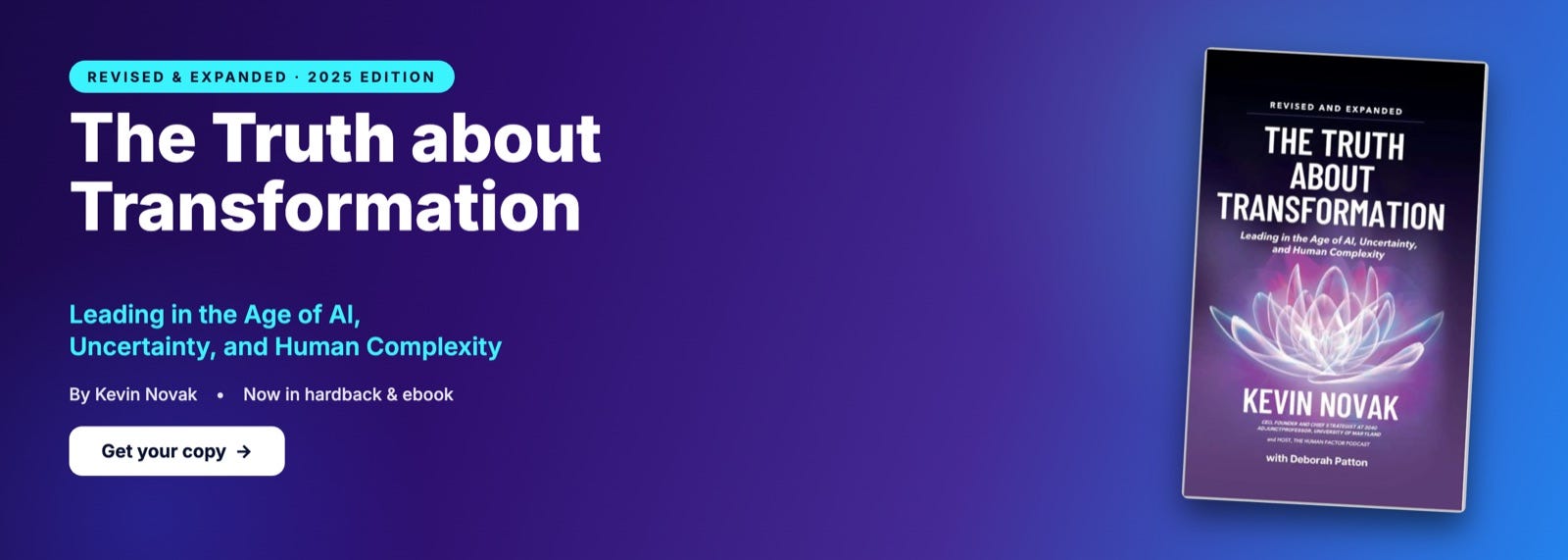
When I published the first edition of The Truth About Transformation in 2022, organizational transformations were already failing at a stubborn 70 percent rate that had persisted for decades, despite better technology, better project management, and unprecedented access to change frameworks. The premise was simple but uncomfortable. Transformation failures are not primarily technology problems or strategy problems. They are human psychology problems that organizations systematically ignore, because addressing them means confronting realities that make leaders uncomfortable. Three years later, that premise has not changed. What has changed is almost everything around it.
Generative AI did not simply add another technology to implement. It triggered and intensified every psychological barrier that already existed. To the average knowledge worker, AI performs tasks once considered uniquely human, improves without instruction, and calls into question assumptions about expertise that people have built whole careers upon. The fear response is not irrational. This is not the resistance organizations met with earlier software. Enterprise systems threatened efficiency and required learning curves, but they did not threaten identity. AI does. And because transformation psychology has always been about identity protection, competence preservation, and the grief that accompanies real change, AI amplifies these dynamics in ways that demand new frameworks.
The revised and expanded 2025 edition builds on the Human Factor Method that informed the original, then extends it into territory that did not exist when the first edition was written. New analysis examines how AI adoption triggers resistance that differs in intensity and character from earlier technology, including the cognitive displacement anxiety employees feel at the prospect of being intellectually redundant. Updated frameworks offer practical guidance for navigating the tension between organizational pressure to adopt AI and a workforce that is not yet ready to embrace tools that feel threatening. New case studies, drawn from real organizations across industries, show what separates the companies that navigate this transition from those that do not, and expanded coverage addresses post-pandemic workforce dynamics, shifting loyalty, and generational differences in how people adopt technology.
Organizations are spending unprecedented sums on AI under competitive pressure that discourages the psychological groundwork that determines success or failure. The 70 percent failure rate has not improved despite decades of experience, and AI will not change that statistic on its own. If anything it will make it worse, because AI triggers resistance at a deeper level than previous technologies. Leaders who recognize that their workforce’s fear is a predictable reaction to perceived identity threat, rather than simple stubbornness, can approach AI transformation differently and succeed where competitors fail.
The truth about transformation has not changed. Technology is an enabler, not a solution. Strategy matters, but execution depends on human behavior.
This book is for leaders who have watched transformation initiatives fail and want to understand why, for executives who sense that something is missing from conventional change management, and for anyone responsible for change who knows the people side is more complex and more consequential than most frameworks admit. The human factor determines whether change succeeds or fails. Understanding it changes how you lead. That is what this book is about.
The Truth About Transformation: Leading in the Age of AI, Uncertainty, and Human Complexity is now available in hardback and ebook.